While I disagree with a lot of the New York Times puts out, I have always thought they were a quality paper. Unfortunately, their credibility has taken a big hit with the latest hit job on presumptive Republican nominee, John McCain. Devoid of the normal journalistic standards you'd expect of a top newspaper, it largely cites anonymous sources and is incredibly skimpy on details for an investigative piece.
As the New Republic documents, editor Bill Keller appears to have shared the concerns over the piece. But in the end, he seems to have rolled over and given it the green light. What makes the piece even more suspicious is that others, including Fox's Carl Cameron found nothing in the story when he investigated it last fall. Given Fox's expected bias against McCain, one might imagine the decision not to pursue the story was indicative of the lack of weight.
McCain's lawyer, Bob Bennett points out that he provided the NYT a list of times when McCain voted in opposition to the interests of Iseman's clients, but the paper left that fact out of its piece. What a surprise!
Thursday, February 21, 2008

Wednesday, February 20, 2008
Scary Chart of the Day: Phoenix Real Estate
Courtesy of a very nifty graphing tool at National City, here's an example of the craziness of the speculative real estate boom that occurred in so many places. As someone who loved his time in Phoenix partly because of reasonable real estate prices, all I can do is shake my head ...


Tuesday, February 19, 2008
Housing Meltdown?
Businessweek recently carried a very negative story on the housing meltdown. A meltdown? If that seems extreme, the authors don't think so. Even for a housing bear like me, some of the predictions and information in the story were surprising and deeply troubling.
Even more troubling was this excerpt:
Ouch! Not looking good for real estate outlook! True, in recent years, the easy availability of credit would support greater leveraging of household budgets (in contrast, in the 20s and 30s, most houses put something like 50% down!), but if the credit crisis is more than short-term, then we just may see this Mankiw prediction come good after all!
Brace yourself: Home prices could sink an additional 25% over the next two or three years, returning values to their 2000 levels in inflation-adjusted terms... Shocking though it might seem, a decline of 25% from here would merely reverse the market's spectacular appreciation during the boom. It would put the national price level right back on its long-term growth trend line, a surprisingly modest 0.4% a year after inflation. There's a recent model for this kind of return to normalcy after the bursting of a financial bubble. The stock market decline that began in 2000 erased most of the gains of the boom of the second half of the 1990s, leaving investors with ordinary-sized returns.
Even more troubling was this excerpt:
For another bearish view, there's what economists refer to as the Mankiw paper. In 1989, long before working in the White House as chief economic adviser or writing his best-selling textbook, Principles of Economics, Harvard University economist N. Gregory Mankiw co-wrote a paper that was startlingly negative on housing. He and David N. Weil predicted that home prices would decline by 47% after inflation over the next 20 years, based on a shrinking pool of potential first-time buyers and an expectation that baby boomers as a group would spend less on housing as they grew older. It could be that Mankiw and Weil were not so much wrong as premature.
Ouch! Not looking good for real estate outlook! True, in recent years, the easy availability of credit would support greater leveraging of household budgets (in contrast, in the 20s and 30s, most houses put something like 50% down!), but if the credit crisis is more than short-term, then we just may see this Mankiw prediction come good after all!
Friday, February 15, 2008
Earmarks Galore!
Courtesy of Taxpayers for Common Sense, we now know just how much pork each member of Congress took home.
Presidential Candidates
Hillary Clinton $342,403,455
Barack Obama $ 91,421,220
John McCain $ 0
Prominent Congressman (no party bias - just the ones I'm familiar with)
John Murtha $176,397,200
Steny Hoyer $139,128,759
Nancy Pelosi $ 94,332,500
Paul Sarbanes $ 71,045,900
Prominent Senators
Dick Durbin $335,181,200
Chuck Grassley $323,628,520
Trent Lott $311,013,500
Chuck Schumer $309,691,055
Harry Reid $305,289,470
Diane Feinstein $295,872,430
Russ Feingold $ 0
Claire McCaskill $ 0
So much for all the talk about eliminating pork in Washington!
Presidential Candidates
Hillary Clinton $342,403,455
Barack Obama $ 91,421,220
John McCain $ 0
Prominent Congressman (no party bias - just the ones I'm familiar with)
John Murtha $176,397,200
Steny Hoyer $139,128,759
Nancy Pelosi $ 94,332,500
Paul Sarbanes $ 71,045,900
Prominent Senators
Dick Durbin $335,181,200
Chuck Grassley $323,628,520
Trent Lott $311,013,500
Chuck Schumer $309,691,055
Harry Reid $305,289,470
Diane Feinstein $295,872,430
Russ Feingold $ 0
Claire McCaskill $ 0
So much for all the talk about eliminating pork in Washington!
Quote of the Day: The Mac on the O
Republican presidential candidate John McCain on his likely Democratic counterpart Barack Obama:
To encourage a country with only rhetoric rather than sound and proven ideas that trust in the strength and courage of free people is not a promise of hope. It is a platitude.
Monday, February 11, 2008
Green Tip of the Day: Kill Vampire Electricity
Bankrate.com reports:
Many appliances use electricity even when they're turned off. It's called a phantom load, or vampire electricity, and as much as 75 percent of the electricity used by home electronics and small appliances is used while they're turned off. The Ohio Consumers Council estimates that it costs consumers $40 to $100 a year.
Friday, February 08, 2008
So Much for Obama Girl
So I just watched on CNN that Obama Girl, the woman who made it big with her YouTube hit professing her crush on Barack, did not vote. Why? She claimed she was too sick to drive across the bridge to vote in Jersey. Not sick enough though to attend an election watching party that night.
How typical! Obama has to worry about the young people flocking to his campaign - how many are the serious political activists who dot campuses, and how many are just ditsy sorostitutes embracing the next big fad?
How typical! Obama has to worry about the young people flocking to his campaign - how many are the serious political activists who dot campuses, and how many are just ditsy sorostitutes embracing the next big fad?
Why Huck Won't Be Veep
I've always thought the notion of Mike Huckabee running with McCain as a vice-president was a little foolish. Sure, Huck brings evangelicals and the South, but it takes more than cold electoral calculus to make a good ticket. For one, few candidates like assistants who can take attention from them, and Huck sure can. But also, Huckabee brings very little in terms of qualifications or experience, and one could argue that McCain needs a policy wonk. More confirmation from this story on Politico:
If not for the baggage from his run, Mitt Romney would be the ideal man to do that. Of course, Mitt would blow the center McCain strives for, and also is more charismatic than the Mac, so you can rule him out.
What Mac needs ... hold your horror ... is a Dick Cheney type veep. Policy wonk, no political ambitions. Ok, maybe not someone quite so polarizing ...
In 2005, he sat down with Stephen Moore of the Wall Street Journal, and said: "I'm going to be honest; I know a lot less about economics than I do about military and foreign policy issues. I still need to be educated." On the campaign trail, he's also suggested he'd look for a vice presidential running mate with strong economic credentials to balance weaknesses of his own.
If not for the baggage from his run, Mitt Romney would be the ideal man to do that. Of course, Mitt would blow the center McCain strives for, and also is more charismatic than the Mac, so you can rule him out.
What Mac needs ... hold your horror ... is a Dick Cheney type veep. Policy wonk, no political ambitions. Ok, maybe not someone quite so polarizing ...
Bye Bye Mitt!
Mitt Romney has left the building. Goodbye! It's sad to see a candidate that could have been something stumble. I didn't support him ... in many ways, I thought he was like that other man from his state that ran for President - John Kerry. Both were brilliant enough to be president, but both had serious credibility issues. People trusted Bush and McCain, even if they didn't really have the best resume.
In the end, Mitt made a calculated gamble. Here was a man who had created phenomenally successful businesses, resurrected a broken Olympics, and introduced universal health care as governor. What better qualifications could you expect in a presidential candidate? But he chose to steer from the data-driven non-ideologue that is his strength to what he perceived to be what the Republican party was looking for. But this isn't 2000 and people aren't looking for another George Bush.
To be fair, maybe his campaign was doomed anyway. In this time of economic angst, I don't know if any candidate could run with a claim of running businesses. Populism is in the air, as you can tell from Huckabee's strong showing in a party that worships the free market. But by running a more sincere campaign, Romney could have managed to get on as a veep, something that simply can't happen now!
In the end, Mitt made a calculated gamble. Here was a man who had created phenomenally successful businesses, resurrected a broken Olympics, and introduced universal health care as governor. What better qualifications could you expect in a presidential candidate? But he chose to steer from the data-driven non-ideologue that is his strength to what he perceived to be what the Republican party was looking for. But this isn't 2000 and people aren't looking for another George Bush.
To be fair, maybe his campaign was doomed anyway. In this time of economic angst, I don't know if any candidate could run with a claim of running businesses. Populism is in the air, as you can tell from Huckabee's strong showing in a party that worships the free market. But by running a more sincere campaign, Romney could have managed to get on as a veep, something that simply can't happen now!
Wednesday, February 06, 2008
Vid of the Day: Jon Stewart on HRC's Hallmark Special
Watch to the end - it's pretty funny how it ends!
Saturday, January 26, 2008
Real Estate Stinks!
I woke up way too early on a Sunday morning, and since all the buzz in India and back stateside has been on the real estate market, I was curious what the historical returns on residential real estate have been. While no data exists in India, I found a study for the US, from which I reproduce this graphic on nominal and real (i.e. inflation-adjusted) returns. Nothing to write home about.

Source
To be fair, this study does not appear to factor in rent savings, which could be substantial. My own experience with online calculators is that there is a huge disparity based on assumptions, so do your homework. Nevertheless, it is useful to consider that home price inflation has only barely beat inflation in much of the US, a far cry from the 10-20% annual returns we have seen recently.
Source
To be fair, this study does not appear to factor in rent savings, which could be substantial. My own experience with online calculators is that there is a huge disparity based on assumptions, so do your homework. Nevertheless, it is useful to consider that home price inflation has only barely beat inflation in much of the US, a far cry from the 10-20% annual returns we have seen recently.
Wednesday, January 23, 2008
Click! Streets of Chennai, India
With my new camera, I'm hoping to take a lot more random pictures, and since I'm on vacation in my hometown of Chennai, India, here are some of the clicks I took today.

What easement? This is Chennai - all that separates traffic from construction is an asbestos sheet. The construction BTW is for the Kathipara junction, which will be Madras' first junction with multiple roads crossing over in different directions!

Since no one seems to follow the lanes, it looks like in some cases, the transportation dept just did away with the wasted paint. Incidentally, this is remarkly unchaotic for Chennai - I need to take a picture of a real Chennai street!

That's a view of the Olympia Tech Park, which I'm told is the largest building in the world to get the LEED gold certification. I need to go and visit this. I read online that only 12% of the property is built up, with 88% designated for extensive landscaping in process. That would be stunning in an area where land prices are at about Rs 4-5 million a ground (~ $2 million/acre!!) and have gone up 50% in the last year!

What easement? This is Chennai - all that separates traffic from construction is an asbestos sheet. The construction BTW is for the Kathipara junction, which will be Madras' first junction with multiple roads crossing over in different directions!

Since no one seems to follow the lanes, it looks like in some cases, the transportation dept just did away with the wasted paint. Incidentally, this is remarkly unchaotic for Chennai - I need to take a picture of a real Chennai street!

Seatbelt anyone?

That's a view of the Olympia Tech Park, which I'm told is the largest building in the world to get the LEED gold certification. I need to go and visit this. I read online that only 12% of the property is built up, with 88% designated for extensive landscaping in process. That would be stunning in an area where land prices are at about Rs 4-5 million a ground (~ $2 million/acre!!) and have gone up 50% in the last year!
Saturday, January 19, 2008
Click! Views from my car on VA-24
As I drove back to Virginia from a trip I had taken, I found myself in a simply incredible fog and snow storm. Here are some pictures from the car. I took this pictures as I drove - don't try this in your car!





Wednesday, January 16, 2008
Did You Know: "Magic Bullet" theory of JFK assassination
I'm watching PBS as I work, watching a show called Oswald's Ghost, and I was surprised to learn that the person who first proposed the theory that was later derided as the "magic bullet" theory was the Ranking Member of the US Senate, Sen. Arlen Specter (R-PA). If you don't know what the "magic bullet" theory, you have to watch Oliver Stone's brilliant movie, JFK, starring Kevin Costner and Tommy Lee Jones.
Monday, January 14, 2008
Zinger of the Day: Pandering to the Latinos
Ruben Navarrette Jr. rants about politicians attempting to pander to Latinos and use silly generalizations assuming the Hispanic community is one mass. Here's a dig at Hillary:
Hillary Clinton got off to a rocky start. While chatting with Hispanic voters in a Mexican restaurant in Las Vegas, Nevada, last week, she stretched for an analogy to explain how all Americans are connected and their problems interconnected despite the fact that "we treat them as though one is guacamole and one is chips."
Aiy caramba! Quick rule of thumb: The nation's 46 million Hispanics are a proud people who have accomplished a great deal, have fought and died for this country in every military conflict dating back to the Civil War, and who embody the American Dream. If you're a politician who is trying to relate to them -- but your own knowledge of the group doesn't extend beyond whatever is on the No. 3 combination plate -- you want to be careful not to be so tone deaf that you wind up insulting them.
Friday, January 11, 2008
US Downgrade?
In the midst of much populism on one end and paranoia on the other end of the presidential campaign, few people paid attention to a cataclysmic headline: Moody's argues that rising debt obligations could lead to the United States having its credit rating cut from AAA. Now, while some of this is saber-rattling, the fact that a rating agency would even dare to talk about it is pretty phenomenal, and reflects the huge entitlement obligations (Social Security, Medicare, etc) that is promised by the US Federal govt. I have previously reported on some amazing slides from the Comptroller General showing just how large this obligation is. Debt is $411,000 per household, with entitlement spending expected to outpace GDP growth several times over. This clearly isn't sustainable! And yet, few presidential candidates are talking about it in more than generalities. Contrast the $46 trillion debt burden with spending by most agencies, and you realize the big threat isn't spending too much money on the Environmental Protection Agency, it's running with a social contract that isn't viable any more!
Thursday, January 10, 2008
Talking on a Cell Phone as Bad as Drunk Driving?
Stunning research at the University of Utah driving under the influence of a cell phone is just as bad as doing so under the influence of alcohol. Participants drove simulator cars while sober, drunk and distracted and their performance in each test case was considered, and it was found that they were actually more likely to crash the car when distracted by a cell phone call than when drunk with a blood alcohol level of 0.08 (the legal limit for a DUI).
Interestingly also, they found no difference in driving behavior when using a handheld cell phone or a handsfree device! Cell phone users were over 5 times more likely to get in accidents than undistracted drivers. And they found cell phone users may also cause traffic backups due to their slow speed and poor lane changing patterns.
Wow, time to think of hanging up that phone! I don't talk a lot on the road, except when I take long trips on the interstate, but that's partly because I've been living in a university town. As I look to move and work, that might change, and suddenly the productivity drain seems a shame.
Interestingly also, they found no difference in driving behavior when using a handheld cell phone or a handsfree device! Cell phone users were over 5 times more likely to get in accidents than undistracted drivers. And they found cell phone users may also cause traffic backups due to their slow speed and poor lane changing patterns.
Wow, time to think of hanging up that phone! I don't talk a lot on the road, except when I take long trips on the interstate, but that's partly because I've been living in a university town. As I look to move and work, that might change, and suddenly the productivity drain seems a shame.
Picture of the Day: China Pollution
From the Switchboard, a blog by the National Resource Defense Council, comes this picture of pollution in Beijing. Eric Young wonders if the marathon during the Olympics will have to be moved out in the country.

Wednesday, January 09, 2008
Say No to Plastic Bags
I never thought I'd be applauding China for being the vanguard of environmental progress, but here goes: the China has banned free plastic bags at grocery stores. The even bigger surprise? Merchants and customers alike are all for it! Way to go!!
The Indian Expert on the Hoods

Columbia university sociologist Sudhir Venkatesh's work formed a chapter in the book, Freakanomics. Now he's got his own book, Gang Leader for a Day. While I haven't read the book, this interview reminds me how interesting his work is. Think: if drug dealers are so successful, how is it that most live with their mother?
As I read the interview, it is sad to see how much we miss with a merely criminal view of gangs, ignoring the social causes.
An excerpt:
There is significant exposure to lead and asbestos and extremely poor nutrition. One of the most jaw-dropping experiences I continue to have is to walk into a grocery store in the inner city. There's a lack of fresh food, decent food.
And another:
It's depressing to see the cycle of failure and the reproduction of poverty. The typical story goes like this: Job is going well, then their kid gets sick. They start missing work, then they get fired. It just makes you want to scream. We're talking about the folks who are trying to help themselves, and they can't do it. That's another kind of sadness.
Brooks on Obama and McCain
David Brooks contrasts the two candidates appealing to independents - John McCain and Barack Obama. I particularly liked this quote:
This is one of the things I love about McCain:
In policy terms, [Obama] is an orthodox liberal. He never tells audiences anything that might make them uncomfortable. In the Senate, he didn’t join the Gang of 14, which created a bipartisan consensus on judges, because it would have meant deviating from liberal orthodoxy and coming to the center. How do you build a trans-partisan coalition when every single policy you propose is reliably on the left?
This is one of the things I love about McCain:
McCain’s campaign events are unpredictable. At Obama events, the candidate gives a moving speech while the crowd rises deliriously as one. McCain holds town meetings. People challenge him, sometimes angrily. And if they oppose him, McCain will come back to them two or three times so that there can be an honest exchange of views. Some politicians try to persuade their audience that they agree with them. McCain welcomes disagreement and talks about it.
Cricket Vid: Oh What a Mash!
I never thought I'd be blogging about cricket the night after the New Hampshire primaries, but some horrendous screw-ups in a recent Test match have got me quite riled up. Thanks to Web 2.0, even an Indian living in the US can now pull up a neat documented collection of the incompetence of the umpiring!

Monday, December 31, 2007
Book of the Day: The Third Wave

Footnote: The challenge if you plan to buy this book is finding a classic edition. The mass paperbacks available in B&N features much too small a print for my liking!
Gimme a Break: It's Illegal to backup your CD on your comp!
This the latest from the Recording Industry Association of America (RIAA). It's illegal to copy a music CD you purchased onto your computer or iPod, even if it's for personal use. I say, gimme a freaking break! I'm all for copyright protections, but the benchmark has always been that you weren't allowed to distribute the music. The theory was that if you spend a good bit of money buying a CD, you were within your rights to make a backup to protect your investment from scratches, but now the RIAA argues in court that that is illegal.
Here's to betting the RIAA will become irrelevant in 10 years!
Here's to betting the RIAA will become irrelevant in 10 years!
Geek Tip: Extreme Makeover Desktop Edition
If you are using Windows XP and are ready for a new look, envious of your Mac-owning yuppy friends who have neat graphics and superior rendering, here are two tips for you.
One, don't be. The Mac is cool for those who want something that looks cool. But all those animations (when you start a program, you actually have the icon bounce!) and other gizmos exact a cost on performance.
Two, having said that, you can get a Vista-like feel to your desktop using the Vista Transformation Pack. Below are four plates showing the boot sequence, the login interface, and two screenshots. I personally don't care for the sidebar, and will do a post some other time reviewing different sidebar options available, but for now, here's to a cleaner UI (that's user interface, for you non-geeks)

One, don't be. The Mac is cool for those who want something that looks cool. But all those animations (when you start a program, you actually have the icon bounce!) and other gizmos exact a cost on performance.
Two, having said that, you can get a Vista-like feel to your desktop using the Vista Transformation Pack. Below are four plates showing the boot sequence, the login interface, and two screenshots. I personally don't care for the sidebar, and will do a post some other time reviewing different sidebar options available, but for now, here's to a cleaner UI (that's user interface, for you non-geeks)
Thursday, December 27, 2007
Pic of the Day: Goodbye Benazir
While she may not have been all she's been cut out to be now in obituaries, Benazir Bhutto represented an important part of post-Zia Pakistan. With her death, there is definitely a power void in the PPP, which is a little scary as they might have been the party to win.
This is the last picture ever taken of a living Benazir. Goodbye Benazir, we'll miss you!

This is the last picture ever taken of a living Benazir. Goodbye Benazir, we'll miss you!
Monday, December 24, 2007
Why Rudy Won't Be President
While he's no longer considered the front-runner, Rudy Guiliani has been topping national polls for the Republican ticket for a while. However, an analysis of the primaries show just how long a shot his winning the ticket is. Let's us walk through this...
(I'm using the numbers from RCP)
Jan 3, Iowa: Guiliani comes in fifth.
Jan 8, NH: Guiliani comes way behind Romney and McCain.
Jan 15, MI: Rudy comes in fourth, behind McCain.
Jan 19, SC: Rudy comes in fifth. That's four down in a row.
Jan 19, NV: Rudy has the first chance of winning. But then again, with 3 down, and he's currently tied with Romney, he might lose the chance to win.
Jan 29, FL: So Rudy leads in opinion polls here right now. But with that kind of drubbing, it's hard to see how he can maintain that lead.
So Rudy could well enter Super Tuesday with no wins, and at most 2. Admittedly, the field's diverse, and others could be in the same situation. But Huckabee, Romney and McCain have a lot more 2nd and 3rd place finishes than Rudy.
(I'm using the numbers from RCP)
Jan 3, Iowa: Guiliani comes in fifth.
Jan 8, NH: Guiliani comes way behind Romney and McCain.
Jan 15, MI: Rudy comes in fourth, behind McCain.
Jan 19, SC: Rudy comes in fifth. That's four down in a row.
Jan 19, NV: Rudy has the first chance of winning. But then again, with 3 down, and he's currently tied with Romney, he might lose the chance to win.
Jan 29, FL: So Rudy leads in opinion polls here right now. But with that kind of drubbing, it's hard to see how he can maintain that lead.
So Rudy could well enter Super Tuesday with no wins, and at most 2. Admittedly, the field's diverse, and others could be in the same situation. But Huckabee, Romney and McCain have a lot more 2nd and 3rd place finishes than Rudy.
Kiva Update
Wow, looks like a Web 2.0 day. I had written previously about microloans using Kiva. Well, I'm happy to report I just had one of my lenders completely repay the loan. Sergei Borodzhayev of Ukraine just repaid $1,200 he had borrowed for buying construction supplies 6 months ago. I'm not free to roll my $75 loan into a new loan to a new entrepreneur. Both Shahin Novruzov of Azerbaijan and Mahbuba Ahmedova of Tajikistan have been paying in a timely fashion.
To learn more, visit Kiva.
To learn more, visit Kiva.
Nifty Website of the Day: Mint
Have trouble keeping track of exactly where you're spending money? Enter Mint. Mint directly obtains information from you bank accounts and credit cards and categorizes your spending patterns. It can recognize a charge under 'Taco Bell' to be in the 'Fast Food' category, but you can also develop rules to classify expenses to one category or the other. It also makes recommendations for changes you can make to save more money, such as (in my case) switching to Verizon from AT&T. There is still a lot of functionality to be built in, but for a free clean website, it's gets 2 thumbs up!
UPDATE Lifehacker has a more comprehensive review on Mint, including screenshots. Also, after having played around a little more, I think the best part of using Mint is tracking your budget.
UPDATE Lifehacker has a more comprehensive review on Mint, including screenshots. Also, after having played around a little more, I think the best part of using Mint is tracking your budget.
Thursday, December 20, 2007
McCain is Back, and He's Gooooood!!
From the start of the presidential race, one candidate has had my hypothetical vote (as a foreigner, I don't get to vote) since the start. John McCain doesn't align with me perfectly, but he represents the kind of politician I would be - fiscally conservative but supporting regulation in some areas, socially conservative on some issues and liberal on issues. But above all, an ethical one.
That McCain seemed almost to be gone when he was an establishment candidate and a front runner. While I did realize the need to embrace the powerful interest groups such as the evangelists, it seemed like the McCain I loved was morphing. Well, no more! The kickass McCain is back, as Time magazine put it and he's super! So super that you even have the Weekly Standard, a prominent conservative outlet, writing quite glowingly about him.
Dissing corn subsidies in Iowa ... now that's a political slogan that will get him support nationally. It helps that he was right on Iraq ... a surge has helped and made Gen Petraeus the 'Man of the Year' (never mind what the folks at Time think!) in my book. But above all, it helps that he's genuine.
To be fair, he's trailing big-time. But I think at some point, people are looking for a candidate who's genuine. I dare say that's why W. won in 2000, and that's why Obama's doing so well in the Democratic circles.
That McCain seemed almost to be gone when he was an establishment candidate and a front runner. While I did realize the need to embrace the powerful interest groups such as the evangelists, it seemed like the McCain I loved was morphing. Well, no more! The kickass McCain is back, as Time magazine put it and he's super! So super that you even have the Weekly Standard, a prominent conservative outlet, writing quite glowingly about him.
Dissing corn subsidies in Iowa ... now that's a political slogan that will get him support nationally. It helps that he was right on Iraq ... a surge has helped and made Gen Petraeus the 'Man of the Year' (never mind what the folks at Time think!) in my book. But above all, it helps that he's genuine.
To be fair, he's trailing big-time. But I think at some point, people are looking for a candidate who's genuine. I dare say that's why W. won in 2000, and that's why Obama's doing so well in the Democratic circles.
Saturday, December 15, 2007
Eau d'asparagus
You know you're a dork when you're drunk at a bar, walk past a room of attractive women, enter a crowded men's room and wonder why asparagus makes your urine smell funny. Well, this time I was sober enough to remember the next day, so here's the answer from WebMD:
it's the result of a simple chemical reaction. Asparagus contains a sulfur compound called mercaptan... When your digestive tract breaks down this substance, by-products are released that cause the funny scent... But not everyone has this experience. Your genetic makeup may determine whether your urine has the odor -- or whether you can actually smell it. Only some people appear to have the gene for the enzyme that breaks down mercaptan into its more pungent parts ... The ability to smell the by-products may also be genetic. Another study published in the same journal found that 10% of a group of 300 Israeli Jews could not detect the odor. In other words, a person's urine could smell, but he or she might not know it.
Tuesday, December 11, 2007
Dissing Iowa
I learned recently that Iowa has NEVER elected a woman as Governor or to the US Senate or Congress. Never! Ever! Great, we give first dips on our president to a bunch of mostly-white male-chauvinists!
Huckabee Watch
So far, it was all about how Huckabee was "folksy", but now the dirt starts flowing.
In a response to a questionnaire when he was running for US Senate, Huckabee has this to say:
This four years after the surgeon general clarified that AIDS is not spread by casual contact.
But the saga goes on ...
Turns out Huckabee was one of the signatories of a Southern Baptist Convention ad that has this to say:
(To be fair, the next line says that husband and wife are equal before God)
I'll keep my eye out for more zanies from Mike.
In a response to a questionnaire when he was running for US Senate, Huckabee has this to say:
It is difficult to understandth e public policy towards AIDS -- it is the first time in the history of civilization in which the carriers of a genuine plague have not been isolatedf rom the generalp opuiation,a nd in which this deadlyd iseasefo r which there is no cure is being treated as a civii rights issue instead of the true health crisis it represents.
This four years after the surgeon general clarified that AIDS is not spread by casual contact.
But the saga goes on ...
Turns out Huckabee was one of the signatories of a Southern Baptist Convention ad that has this to say:
You are right because you called wives to graciously submit to their husband's sacrificial leadership.
(To be fair, the next line says that husband and wife are equal before God)
I'll keep my eye out for more zanies from Mike.
Chart of the Day: Median Home Price to Median Income
Courtesy of GMO, the ratio of median home price to median income. Anyone who thinks this real estate slump is over (like the snake-oil charmers at the National Association of Realtors) are going to be sadly mistaken!


Sunday, December 09, 2007
Website of the Day: Prosper.com
The website of today is Prosper. Started by the founder of E-LOAN, the idea of the website is to leverage the power of the Internet to allowing individuals to lend and borrow to each other. If you want to be a lender, you can search for individuals based on credit quality and loan size, or any of many other metrics. You bid on an interest rate, and can place a bid for as low as $50. The idea is very similar to Kiva, about which I have previously written, except for the lack of philanthropic intentions and the profit.
Monday, December 03, 2007
Stunning Prediction of the Day: Lending in a Credit Crunch
I read this in John Maudlin's latest piece
Jan Hatzius of Goldman Sachs forecasts a recession and that the growing credit crunch will reduce lending by about $2 trillion
Wednesday, November 28, 2007
I'll Pass on Smart Phones, Thank You!
Jack Trout has a great piece in Forbes magazine about why convergence is a pipe dream. Convergence refers to the idea that we will eventually have a single device that handles all our needs. The iPhone has been labeled a giant leap for convergence. Trout argues that the idea of getting something without a tradeoff is impossible. An excerpt:
Palm was wildly successful with organizers; then they introduced the unreliable and unremarkable Treo, essentially an organizer that makes phone calls as well ... BlackBerrys are great at e-mail, but the phone is barely adequate. The Motorola Q crashes almost as often as the Treo. The Apple iPhone is terrific for music and media, but lousy for e-mail and phoning. For marketing reasons, everybody is trying to cram all these complicated features into ever-sleeker, ever-thinner boxes, while also adding longer battery life, and so on. Invariably, smart-phone designers have to make compromises that mean some functions don't work especially well.
Tuesday, November 27, 2007
Google Censorship
This is troubling - evidently Google doesn't bend over just for China. YouTube has censored a video by a human rights activist in Egypt showing the torture by the local police. This was supposed to be the great promise of the Internet - the ability to share not only the meaningless garbage that fill the bandwidth, but to expose and educate. And yet YouTube decided that it wasn't up to that mission. Of course, as Michael Goldfarb at the Weekly Standard pointed out, YouTube had no trouble showing graphic videos of the Abu Gharib scandal. That was the right decision - after posting a warning and ensuring that viewers were over 18 years old, YouTube allowed you to see the videos. We don't need Big Brother censoring us, and we certainly don't need corporate America doing so! Shame on you, Google!
Saturday, November 24, 2007
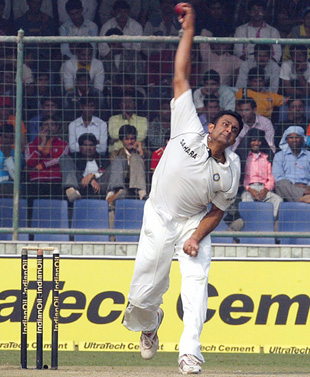
Photo of the Day: A Spinner in Action
Many of you probably know nothing about cricket. Greatest sport ever. Truly. A type of bowler (similar to a pitcher in baseball) is a spin bowler, and we all tend to think of them as crafty with their fingers. I loved this pic because it emphasizes the concert of different muscles coming together - look at the tension in the legs, abs, all over.
Friday, November 23, 2007

Picture of the Day: Iceberg!
A Liberian-flagged cruise ship after hitting an iceberg in Antartica. Thankfully, no one was hurt!

Random Thoughts on Black Friday
It was my first time in several years buying anything on Black Friday. There were quite a few deals - the one that got me to Walmart was this Kodak ZD710 digital camera with a 7.2MP resolution and 10X optical zoom. There were some other spectacular deals, and definitely some crowds, a topic supported by early news reports. But looking at people's shopping carts, and the vast stacks of unsold specials in my city's Walmart, I wonder if this is indeed an indication of a retail slowdown. It does appear to me that people in at least my town seem to be getting much more conscious of expenditures, possibly due to the housing slowdown and rising oil prices? I'll be curiously waiting for the final numbers ...
Speaking of shopping, be sure to check return policies! I haven't purchased too much more than books online, and as I was considering buying a camera (yes, I'm probably the LAST person to still be using a film point and shoot!) I decided to peek at the return policies. Amazon gives you a 30 day return period (although there's a grace period around the holidays), and any opened item loses 20% of its value. On Buy.com, it's 14 days and a 15% restocking fee. If you think you're not sure about the quality of the product you are buying, favor the traditional retailers - a purchase at Walmart can be returned to a store for no extra charge, even if you bought it online.
Speaking of cameras, shopping for one is a bit like going to the gym. In the gym, there's the ridiculous emphasis on the bench press even though it is not a decent metric of fitness. In the camera world, it appears it's all megapixels and megapixels (ok, there are times when two seemingly identical cameras are vastly different in prices, but not for any reason a novice like me can figure out) Here's a tip: think what you'll use it for. I talked to a few friends savvier about these gizmos than I (hey, I still use a film camera!), and it seemed evident to me that if your application is mostly for travel, a good optical zoom is far more important than MP. If you plan to make posters, or make prints from portions of your photo (i.e. you crop out part of the picture) then MP are much more important.
Speaking of shopping, be sure to check return policies! I haven't purchased too much more than books online, and as I was considering buying a camera (yes, I'm probably the LAST person to still be using a film point and shoot!) I decided to peek at the return policies. Amazon gives you a 30 day return period (although there's a grace period around the holidays), and any opened item loses 20% of its value. On Buy.com, it's 14 days and a 15% restocking fee. If you think you're not sure about the quality of the product you are buying, favor the traditional retailers - a purchase at Walmart can be returned to a store for no extra charge, even if you bought it online.
Speaking of cameras, shopping for one is a bit like going to the gym. In the gym, there's the ridiculous emphasis on the bench press even though it is not a decent metric of fitness. In the camera world, it appears it's all megapixels and megapixels (ok, there are times when two seemingly identical cameras are vastly different in prices, but not for any reason a novice like me can figure out) Here's a tip: think what you'll use it for. I talked to a few friends savvier about these gizmos than I (hey, I still use a film camera!), and it seemed evident to me that if your application is mostly for travel, a good optical zoom is far more important than MP. If you plan to make posters, or make prints from portions of your photo (i.e. you crop out part of the picture) then MP are much more important.
Sunday, November 18, 2007
Dem Debate: Turn off the Commentators
Anyone else tired of the crap political commentators put out after every debate? After the last edition, one I watched because I was finally done with my doctoral defense (yes, yours truly now has signatures approving his Dr.-dom!), I couldn't help but notice how disparate my views were from those of the "experts".
Hillary, they told us, put in a stellar performance. Really? I must have missed that. What I saw were soft questions (including the most ridiculous question about diamonds or pearls, one it turns out CNN encouraged an audience member to ask), and a failure to commit to specific policies. Sen. Clinton is best when she has to play the old pol's game of being everything to everyone.
Obama, we are told, stumbled. I'm not that impressed with him, but at least he did on occasion commit to where he stands on issues. Of course, that was few and far between, as the top tier candidates largely deflected every question to a beration of the Bush administration.
The sidelined candidates, on the other hand, did a stellar job. Richardson and Dodd were very good in talking about specifics, and Biden had flashes of brilliance when asked about foreign policy. But the media just writes a few brief lines about them - after all, a Pakistan policy isn't as exciting as how Hillary snapped at Edwards!
Hillary, they told us, put in a stellar performance. Really? I must have missed that. What I saw were soft questions (including the most ridiculous question about diamonds or pearls, one it turns out CNN encouraged an audience member to ask), and a failure to commit to specific policies. Sen. Clinton is best when she has to play the old pol's game of being everything to everyone.
Obama, we are told, stumbled. I'm not that impressed with him, but at least he did on occasion commit to where he stands on issues. Of course, that was few and far between, as the top tier candidates largely deflected every question to a beration of the Bush administration.
The sidelined candidates, on the other hand, did a stellar job. Richardson and Dodd were very good in talking about specifics, and Biden had flashes of brilliance when asked about foreign policy. But the media just writes a few brief lines about them - after all, a Pakistan policy isn't as exciting as how Hillary snapped at Edwards!
Monday, November 12, 2007

Sunday, October 28, 2007
Friday, October 19, 2007
Picture of the Day: Lake Lanier
The drought in Georgia is very worrying - estimates are that Atlanta has less than 60 days of water supply left. This picture (courtesy USA Today) is of Lake Lanier in Cummings, Ga. where the drought has exposed several docks.

Thursday, October 11, 2007
No no Grandpa, Don't Overload Stocks!
This morning, as I chowed down my Raisin Bran, I happened to catch a personal finance "expert" who recommended that even people in their 60s should have 70% of their financial assets in stocks. 70 percent!! That's the highest I've ever heard, and while I have no readers that old that I know of, I hope younger readers can be the light and advice Grandpa and Grandma against this foolhardiness.
I've ranted before that any asset is only worth the price you pay for it. There is no such thing as a free lunch, and those who thought there was now make up the numbers in the foreclosure listings. But since I'm way too busy writing that epic called a dissertation (seriously, at times it does feel like one!), I'll leave you with this one great article from the one great magazine called the Economist. An excerpt (emphasis added):
My point isn't to stay away from stocks. It's just that stocks appear kind of pricey to me. If not for some special circumstances, I'd probably invest mostly in high quality issues, or better yet market-neutral funds which invest in these issues (actually about half my money is in one such fund), and overweight TIPS and cold hard cash (paying attention to yield, of course)
I've ranted before that any asset is only worth the price you pay for it. There is no such thing as a free lunch, and those who thought there was now make up the numbers in the foreclosure listings. But since I'm way too busy writing that epic called a dissertation (seriously, at times it does feel like one!), I'll leave you with this one great article from the one great magazine called the Economist. An excerpt (emphasis added):
Elroy Dimson, Paul Marsh and Mike Staunton of the London Business School examined the record of 16 stockmarkets which were in continuous operation over the course of the 20th century. In itself, this selection showed survivorship bias by excluding the likes of Russia and China. The academics found that only three other countries could match the American record of having no 20-year periods with negative real returns. Other investors were far less lucky. Japanese, French, German and Spanish investors all suffered instances where they had to wait 50-60 years to earn a positive real return; in Italy and Belgium, the waiting period stretched to 70 years. It was no good following the famous advice to “put the shares in a drawer and forget about them”; the furniture would not have lasted that long.
My point isn't to stay away from stocks. It's just that stocks appear kind of pricey to me. If not for some special circumstances, I'd probably invest mostly in high quality issues, or better yet market-neutral funds which invest in these issues (actually about half my money is in one such fund), and overweight TIPS and cold hard cash (paying attention to yield, of course)
Monday, October 08, 2007
Big Brother Is Indeed Watching You
Washington has been swamped with talk of legal and illegal wiretaps and other intrusions on the privacy of individuals who, depending on who you believe, may or may not be related to terrorists. But the media has largely ignored the much greater story of surveillance on US citizens who are most definitely not involved with terrorists. The latest camera law in Baltimore is a troubling new trend of cities that are using CCTVs to intrude on the privacies of ordinary citizens. While the National Security Agency is not incorruptible, I'm much more disturbed (even as a foreigner) with surveillance by local officials, where I'd suspect the checks and balances are much weaker.
At what point are we going to discuss this issue without using it as an opportunity to take potshots at the Bush administration?
At what point are we going to discuss this issue without using it as an opportunity to take potshots at the Bush administration?
Sunday, October 07, 2007
And the IgNoble goes to ...
The Ig Noble awards are out! If you have never heard of them, where have you been? Here is the Wikipedia article on the awards.
Here are some of my favorites from this year's award winners (here is the story)
To be fair, I think some of the research is useful - a previous awardee, for example, studied why woodpeckers don't get headaches. That could be a blockbuster drug of the future.
Here are some of my favorites from this year's award winners (here is the story)
- Brian Witcombe of Gloucester and Dan Meyer of Antioch, Tennessee, for their report in the British Medical Journal, Sword Swallowing and its Side-Effects
- Mayu Yamamoto of the International Medical Centre of Japan, for developing a way to extract vanilla essence from cow dung
- Juant Manuel Toro, Josep Trobalon and Núria Sebastián-Gallés, of Barcelona University, for showing that rats cannot tell the difference between a person speaking Japanese backwards and a person speaking Dutch backwards
- The Air Force Wright Laboratory, Dayton, Ohio, for instigating research on a chemical weapon to make enemy soldiers sexually irresistible to each other
To be fair, I think some of the research is useful - a previous awardee, for example, studied why woodpeckers don't get headaches. That could be a blockbuster drug of the future.
Wednesday, October 03, 2007
The Terror Democracy Dilemna
Now that Iranian President Mahmud Ahmedinijad is safely back in Iran and the excitement (and not in a good way!) surrounding his visit has subsided, it's worth considering one little detail that has been routinely ignored by the press, and even an academic such as the President of Columbia University. Read this line ....
Mr Ahmedinijad is not a dictator
That's right - despite all the brouhaha over Mr Ahmedinijad, he is many things but not a dictator. Rather, he's been elected in relatively free and fair elections. That's the little detail everyone seems to be ignoring - Iran is a democracy. Now, I have no love lost for Mr Ahmedinijad, and I do think his rhetoric is unfortunate, but I think the hype's getting ahead of him. He actually doesn't really have that much power, and certainly there's enough reason to believe his sabre-rattling is to boost his popularity that's taking a beating thanks to an economy that's tanking despite soaring gas prices.
But this presents a dilemna for our idealist leaders. We'd like to believe democracy goes hand in hand with all we hold good, but this is hardly the case. Remember Adolf Hilter was a democratically elected leader. Ditto Russian President Vladimir Putin, who despite his oppressive rule seems to have record-breaking popularity. It just doesn't fit. In fact, a failing democracy is more likely to have leaders whip up sentiments to distract the electorate.
That's not to say we should not support the installation of democracy globally. Let's just not be so idealistic to believe that democracies are good for us in the absence of taking other steps to deal with real issues. Oh yeah, and dial down that rhetoric - we don't need a war with Iran!
Mr Ahmedinijad is not a dictator
That's right - despite all the brouhaha over Mr Ahmedinijad, he is many things but not a dictator. Rather, he's been elected in relatively free and fair elections. That's the little detail everyone seems to be ignoring - Iran is a democracy. Now, I have no love lost for Mr Ahmedinijad, and I do think his rhetoric is unfortunate, but I think the hype's getting ahead of him. He actually doesn't really have that much power, and certainly there's enough reason to believe his sabre-rattling is to boost his popularity that's taking a beating thanks to an economy that's tanking despite soaring gas prices.
But this presents a dilemna for our idealist leaders. We'd like to believe democracy goes hand in hand with all we hold good, but this is hardly the case. Remember Adolf Hilter was a democratically elected leader. Ditto Russian President Vladimir Putin, who despite his oppressive rule seems to have record-breaking popularity. It just doesn't fit. In fact, a failing democracy is more likely to have leaders whip up sentiments to distract the electorate.
That's not to say we should not support the installation of democracy globally. Let's just not be so idealistic to believe that democracies are good for us in the absence of taking other steps to deal with real issues. Oh yeah, and dial down that rhetoric - we don't need a war with Iran!
Wednesday, September 26, 2007
A Secondhand Perspective on a Health Care Crisis
I was at my mechanic today, chatting up with the owner's daughter, only to learn the owner had been hospitalized today for a diabetic condition. Turns out the owner did not have health insurance, as the soaring costs of premiums had resulted in a tab of $2,400 a month for the four employees in the business. Why? Insurance companies do not want to accept customers with pre-existing conditions, and hence such patients are forced to fork over exorbitant premiums to participate in plans will allow them in.
Here is a businessman whose family has run this shop for decades, long enough to qualify to be a historical feature of the city. And yet we have a health care system than endangers the well-being of such a model citizen! For politicians to pretend that there isn't a crisis is disingenous, and while I don't believe in a huge government solution like some, government's got to be part of the solution.
Here is a businessman whose family has run this shop for decades, long enough to qualify to be a historical feature of the city. And yet we have a health care system than endangers the well-being of such a model citizen! For politicians to pretend that there isn't a crisis is disingenous, and while I don't believe in a huge government solution like some, government's got to be part of the solution.
Sunday, September 23, 2007
Tough Questions on Free Speech
It was a remarkable week for the idea of freedom of expression, and yet you saw precious little analysis of some of the tough questions surrounding free speech in the media. This should be a week we're all contemplating the limits of this issue, so I thought I'd open the floor to thoughts.
The first case involved a student who broke protocol and jumped ahead of a line after question time to ask a question of Senator John Kerry. While the senator appeared to be willing to answer the question, police attempted to escort the student out, and in what seems to me like antics for the camera, the student resisted and was Tasered.
The second case was an MIT student who wore what looked like a bomb under her dress to the airport to pick up her boyfriend, when she was instead picked up and arrested.
The third case is the brouhaha over Iranian President Ahmedinijad's scheduled talk at Columbia.
Depending on your political persuasion, some of these are slam dunks. Well, I beg to differ.
Start with the MIT student. It's obvious she was stupid to arrive in an airport posing what could be perceived as a security threat, and it's obvious that the TSA were quite right in arresting her. What we do need to think about is how far we'll take that argument in the future. A friend of mine told me some time back about a "Politically Incorrect" Halloween party they had, where one of the characters was dressed as a suicide bomber. May that be perceived as a threat when such a person walks on the street? My own university had an issue with a student facing civil and administrative penalties for practicing for a play with a fake gun.
My view on the Tasering of the student is that it was quite the right course. After all, here was a student who was being disruptive to an event and resisting eviction. But even that isn't as cut-and-dry in my mind. After all, this was a public university, and it's certainly worth discussing how appropriate it is to attempt to censor or regulate speech in such an institution.
Then to Mr Ahmedinijad. On the one hand, this is obviously a guy who could be our #1 enemy, and we are providing him with a platform for propoganda. And yet, how could we censor a man who we are critical of because he's against free societies. I actually applaud Columbia for negotiating the terms so that the Iranian president will have to answer any questions from the audience - sometimes the best disinfectant is sunlight!
But those are my views. You may have others, and I'd love to hear from you.
The first case involved a student who broke protocol and jumped ahead of a line after question time to ask a question of Senator John Kerry. While the senator appeared to be willing to answer the question, police attempted to escort the student out, and in what seems to me like antics for the camera, the student resisted and was Tasered.
The second case was an MIT student who wore what looked like a bomb under her dress to the airport to pick up her boyfriend, when she was instead picked up and arrested.
The third case is the brouhaha over Iranian President Ahmedinijad's scheduled talk at Columbia.
Depending on your political persuasion, some of these are slam dunks. Well, I beg to differ.
Start with the MIT student. It's obvious she was stupid to arrive in an airport posing what could be perceived as a security threat, and it's obvious that the TSA were quite right in arresting her. What we do need to think about is how far we'll take that argument in the future. A friend of mine told me some time back about a "Politically Incorrect" Halloween party they had, where one of the characters was dressed as a suicide bomber. May that be perceived as a threat when such a person walks on the street? My own university had an issue with a student facing civil and administrative penalties for practicing for a play with a fake gun.
My view on the Tasering of the student is that it was quite the right course. After all, here was a student who was being disruptive to an event and resisting eviction. But even that isn't as cut-and-dry in my mind. After all, this was a public university, and it's certainly worth discussing how appropriate it is to attempt to censor or regulate speech in such an institution.
Then to Mr Ahmedinijad. On the one hand, this is obviously a guy who could be our #1 enemy, and we are providing him with a platform for propoganda. And yet, how could we censor a man who we are critical of because he's against free societies. I actually applaud Columbia for negotiating the terms so that the Iranian president will have to answer any questions from the audience - sometimes the best disinfectant is sunlight!
But those are my views. You may have others, and I'd love to hear from you.
Friday, September 21, 2007
Opinion of the Day: Ritzholtz on Social Networking
I'm waiting for a model to finish running, and need something to keep me awake, so here was an interesting piece from Barry Ritzholtz on why to pass on social networking sites. For full disclosure, I do participate in social networking sites.
Monday, September 17, 2007

Quote of the Day: Hamburger Offsets
Environmental humorist Lou Bendrick on the idea of buying carbon offsets to compensate for the global warming pollution caused by our actions:
You get to sin, but you get to buy your way out of it. It's sort of silly. It's like buying tofu offsets to be able to eat a hamburger.
Sunday, September 16, 2007
Rant of the Day: "Self Help"
One of my favorite places in the world is a bookstore, but if there's one gripe I have, it's the section titled 'Self-Help'. I mean, don't get me wrong, I have no problem with books from Dr Phil being labeled such, but the issue with this big sweep was that all manner of books are tagged as such. So you read a book on improving your productivity, getting more from life, being a better person ... Self-Help, Self-Help and Self-Help.
Now, I'm not normally one for tags. Readers of my ramblings know I'm not particularly PC. But I do object with the self-help tag. It suggests people who read these books are somehow flawed. Well, it's true, we're all flawed and imperfect, but that leads me to my gripe. By using a demeaning term as "self-help", it drives so many people from seeking to become better people. And thus, we have a society filled with people who are convinced they are perfect; that seeking to discover your flaws and insecurities is somehow an indication that you aren't quite right ... I've even had people brag about how they haven't changed since they were a teenager! Well, newsflash: if you aren't changing, you aren't growing!
Now, I'm not normally one for tags. Readers of my ramblings know I'm not particularly PC. But I do object with the self-help tag. It suggests people who read these books are somehow flawed. Well, it's true, we're all flawed and imperfect, but that leads me to my gripe. By using a demeaning term as "self-help", it drives so many people from seeking to become better people. And thus, we have a society filled with people who are convinced they are perfect; that seeking to discover your flaws and insecurities is somehow an indication that you aren't quite right ... I've even had people brag about how they haven't changed since they were a teenager! Well, newsflash: if you aren't changing, you aren't growing!
A Lesson in Grit
Here's something you don't find a lot of on this blog - a personal story. I try to stay away from them, partly because I prefer my deepest emotions, thoughts and insecurities are better a private affair, and also because I think they have no meaning or relevance in another's life beyond watching a freak show. This time however, I was moved by the grit of an elderly lady to make my reflections public.
I injured my thumb last Saturday with an embarrassing fall on a dance floor caused by way too many inebriating fluids, as I took down a rather attractive lady who has innocently mistaken my newfound confidence as a measure of competence. The thumb swelled up, and as I struggled with the pain all night, I was in a rather whiny mood Sunday morning. I was staying with a friend's grandparents, and his grandmom did what all grandparents do - try to make me feel better both about the injury and the incident that caused it.
A little later though, she herself took a fall, and came crashing down. She was unable to get up, and we called the paramedics for help. As we waited for relief, here was on old lady with artificial hips, who could barely move her legs and who was clearly in pain, still laughing and joking, teasing me for rubbing off on her, and being so incredibly jovial. Through it all, not once did she complain, beyond calling herself a little silly; there were no screams of pain, and in fact there was a deliberate effort to conceal any she may have been feeling.
I wish I could say I was transformed instantly. Chances are I still will be a wimp the next time I injure myself. Maybe someone should show me this post when I do.
I injured my thumb last Saturday with an embarrassing fall on a dance floor caused by way too many inebriating fluids, as I took down a rather attractive lady who has innocently mistaken my newfound confidence as a measure of competence. The thumb swelled up, and as I struggled with the pain all night, I was in a rather whiny mood Sunday morning. I was staying with a friend's grandparents, and his grandmom did what all grandparents do - try to make me feel better both about the injury and the incident that caused it.
A little later though, she herself took a fall, and came crashing down. She was unable to get up, and we called the paramedics for help. As we waited for relief, here was on old lady with artificial hips, who could barely move her legs and who was clearly in pain, still laughing and joking, teasing me for rubbing off on her, and being so incredibly jovial. Through it all, not once did she complain, beyond calling herself a little silly; there were no screams of pain, and in fact there was a deliberate effort to conceal any she may have been feeling.
I wish I could say I was transformed instantly. Chances are I still will be a wimp the next time I injure myself. Maybe someone should show me this post when I do.
Thursday, September 13, 2007
Say No to Biofuel
It's 3 am here at Portland airport, and even this cup of java can't trigger a very eloquent essay, but on my drive here, I heard a story I felt compelled to post here. Turns out rising commodity prices have caused rising pasta prices in Italy. Add that to the soaring prices of corn that affect the poor in Latin America, and you have a problem. While biofuel is not the only problem, this story emphasizes why biofuel is a sinful fuel, maybe even more than the much maligned petroleum sources.
Seriously, if you truly care about global warming, skip the touted technological solutions and focus on good ol' conservation. That's not to say solar and wind and whatever else don't have a place in society - just that it's silly to think they'll make a big dent in our "dirty" energy consumption or greenhouse gas loads any time soon.
Seriously, if you truly care about global warming, skip the touted technological solutions and focus on good ol' conservation. That's not to say solar and wind and whatever else don't have a place in society - just that it's silly to think they'll make a big dent in our "dirty" energy consumption or greenhouse gas loads any time soon.
Wednesday, August 29, 2007
Video of the Day: CAUTION Stupidity may be Contagious!
If you haven't watched Ms Teen South Carolina, where have you been? God, it is the most amazing video ever! I first thought she froze under pressure, but after catching her on the 'Today' show (no, I don't usually watch the show, thank heavens, just collateral damage from channel-surfing!), I decided this was the real deal!
I never understood why paegents even care to ask these silly questions, which expose participants as stupid brainless bimbos! Does anyone really believe one of these good-looking clowns is going to solve world hunger?
I never understood why paegents even care to ask these silly questions, which expose participants as stupid brainless bimbos! Does anyone really believe one of these good-looking clowns is going to solve world hunger?
Sunday, August 26, 2007
American Wars: Death Tolls
Death Toll of US Troops in Major Wars of the Last 100 Years
This is not to underplay the dealth of over 3,000 of our finest. But it is worth putting that toll in perspective - American troop casualties are still a lot smaller than in previous wars, and indeed despite the negativism of the media, the mission's in better shape. Iraq has a democratically elected government, as inept as Washington, for starters, and a people who seem committed to democracy, judging by the turnout at the last election. That's more than we could say about Korea or Vietnam.
| World War I | 116,708 |
| World War II | 131,028,000 |
| Vietnam | 58,209 |
| Korea | 36,516 |
| Iraq | 3,278 and counting |
This is not to underplay the dealth of over 3,000 of our finest. But it is worth putting that toll in perspective - American troop casualties are still a lot smaller than in previous wars, and indeed despite the negativism of the media, the mission's in better shape. Iraq has a democratically elected government, as inept as Washington, for starters, and a people who seem committed to democracy, judging by the turnout at the last election. That's more than we could say about Korea or Vietnam.
Tuesday, August 21, 2007
The Abuse of Math
Economist magazine had a wonderful series of stories on the recent financial crisis. Wall Street forgot the lessons of Long-Term Capital Management and embraced math in a big way. Unfortunately, they forgot that all models are based on something called assumptions, and any model is only as good as its assumptions. How way off base were the models?
Goldman Sachs admitted as much when it said that its funds had been hit by moves that its models suggested were 25 standard deviations away from normal. In terms of probability (where 1 is a certainty and 0 an impossibility), that translates into a likelihood of 0.000...0006, where there are 138 zeros before the six. That is silly.
Friday, August 17, 2007
"The Fed Rescues the Market, It's Safe to Play Again"
If you believed the hype in the media and the much of the financial world, the Fed has saved the world. By cutting the discount rate by 1 percent, financial Armageddon has been saved, and we can all go back to how well stocks will do. The media's largely been pushing this idea, the idea that somehow everyone got a little excited, so there was a correction, but now the Fed has acted and all's well.
It's easy to forget what started this in the first place. Financial institutions have a ridiculous amount of risky financial assets that have been blessed as risk-free, and the realization that the blessing was from a charlatan might mean at some point we have to realize the reality. In a classic problem of game theory, everyone's ok as long as no one brings the system down, but if the system were to collapse, it's best to be the first out of the building. So institutions and brokers and the press try to play down the CDO scam (for more on CDOs, read my previous postings, here and here)
And yet it's worth asking what indeed a Fed discount rate cut means (mind you, this is not a Fed Funds rate cut which would lower the rate consumers pay). If anything, it's cause for concern that the Fed, uptil now so concerned with inflation, suddenly perceives threats so great that it could substantially affect growth. And if the US and the world is indeed so robust, why should changes in a discount rate affect markets so radically? I would argue it's because investors today are asked to place their faith on a string on tenous assumptions, the failure of any one of which could produce severe consequences.
But ignore the killjoys like me. Believe the fantasy - the Fed has rescued the world. We can all go back to watching Cramer now. Thank you.
It's easy to forget what started this in the first place. Financial institutions have a ridiculous amount of risky financial assets that have been blessed as risk-free, and the realization that the blessing was from a charlatan might mean at some point we have to realize the reality. In a classic problem of game theory, everyone's ok as long as no one brings the system down, but if the system were to collapse, it's best to be the first out of the building. So institutions and brokers and the press try to play down the CDO scam (for more on CDOs, read my previous postings, here and here)
And yet it's worth asking what indeed a Fed discount rate cut means (mind you, this is not a Fed Funds rate cut which would lower the rate consumers pay). If anything, it's cause for concern that the Fed, uptil now so concerned with inflation, suddenly perceives threats so great that it could substantially affect growth. And if the US and the world is indeed so robust, why should changes in a discount rate affect markets so radically? I would argue it's because investors today are asked to place their faith on a string on tenous assumptions, the failure of any one of which could produce severe consequences.
But ignore the killjoys like me. Believe the fantasy - the Fed has rescued the world. We can all go back to watching Cramer now. Thank you.
Wednesday, August 15, 2007
Tuesday, August 14, 2007
Sickened by the Xenophobes: Fact Check!
Suddenly, a bankrupt Republican party is trying to capitalize on immigrant-hating to drum up a base that feels defeated without a single vote being cast. Just today, political architect Newt Gingrich, a potential candidate for the 2008 Presidency, said he is "sickened with Bush and Congress" for going on vacation while "young Americans are massacred" by illegal immigrants. Presidential hopefuls Guilani and Romney weighed in too, with the former referring to an invasion, all alluding to the high crime these immigrants bring along.
Unfortunately for them, it's a myth! The Immigration Policy Center at the American Immigration Law Foundation reviewed 2000 Census data and came up with some pretty interesting (and inconvenient, for the xenophobes) findings:
But then it gets even more interesting...
Wow! That stunned me, and it should serve as a wake-up call to the populace that hate is not the answer. Their positions on immigration are a large part of why Guilani, Romney, Gingrich and others won't get my symbolic vote this election cycle. (Symbolic because I'm not a US citizen)
Unfortunately for them, it's a myth! The Immigration Policy Center at the American Immigration Law Foundation reviewed 2000 Census data and came up with some pretty interesting (and inconvenient, for the xenophobes) findings:
- A native-born man, ages 18-39, is 5 times more likely to be incarcerated.
- Foreign born incarceration rates are 2.5x less than the native white man and 17x less than the native black man.
- Across ethnic groups, the incarceration rates for the foreign-born men are less than those for the native-born men.
But then it gets even more interesting...
- Incarceration rates of foreign-born men, as well as other issues like family disintegration and drug and alcohol addiction, increase with duration of stay in the US, although still less than comparable rates for native-born men.
- Immigrants, especially from Latin America, give birth to fewer underweight babies and have lower rates of adult and child mortality despite poverty and barriers to proper health care.
Wow! That stunned me, and it should serve as a wake-up call to the populace that hate is not the answer. Their positions on immigration are a large part of why Guilani, Romney, Gingrich and others won't get my symbolic vote this election cycle. (Symbolic because I'm not a US citizen)
Sunday, August 12, 2007
Go Diego Go
Turns out all those kids' "educational" programs aren't that great after all. Time magazine reports on a latest study that programs like "Baby Einstein" cause more harm than good. Turns out that video learning is overstimulation, and doesn't affect a kids' learning in the same ways as personal interaction. This is consistent with an earlier study on the detrimental effects of outsourcing child learning to Sesame Street. The good news? Turns out reading to your kids helps them develop language skills far superior to the control group.
This raises an interesting question, one I discussed at some length with the friend who sent me the story. Does this story basically call you to re-visit the stay-at-home parent concept? It isn't simply about the quality of daycare. After all, the explosion in educational TV is partly because two parents tired from a days' work don't have the mental strength to engage a baby.
If you have views on the subject, I encourage you to use the comment feature of this blog to let them be known. As with so many things, I'm weighing the pros and cons, and I always love hearing other points of view.
This raises an interesting question, one I discussed at some length with the friend who sent me the story. Does this story basically call you to re-visit the stay-at-home parent concept? It isn't simply about the quality of daycare. After all, the explosion in educational TV is partly because two parents tired from a days' work don't have the mental strength to engage a baby.
If you have views on the subject, I encourage you to use the comment feature of this blog to let them be known. As with so many things, I'm weighing the pros and cons, and I always love hearing other points of view.
Let the Foreclosures Begin!
Many politicians are complaining about the rising wave of foreclosures, and insisting that government needs to step in and stem the crisis. Thankfully, President Bush has decided to do so such thing. Why not, you ask? Well, it simply isn't the government's place in a free-market system to insulate individuals from risk; such a practice simply encourages greater risk-taking and creates ever-greater bubbles until the protector is no longer able to be a hero.
Housing prices must correct! I hope to be financially in a position to benefit from a substantial correction down the road, but this isn't simply about the value investor in me who's hoping in asset price corrections to give me goods at bargain prices. We have frequently heard complaints that housing in most big cities is unaffordable. The Housing Affordability Index put out by the National Association of Realtors declined from a high of 133.2 in 1998 to 113.9 in March 2007, thanks to the housing boom. But even that understates the problem because it considers home prices across the US - the median price, for example, is $215,300 - good luck finding a home for that price in almost any decent-sized American city.
A real estate correction then is appropriate, and may be desirable in the long-term. Despite all the huey, one could argue that indeed price appreciation in excess of wages is rather undesirable, and if anything, government should consider tweaking tax policy to dissuade rampant speculation, including measures such as limiting the number of times you can flip a house before you lose capital tax gains.
This is hardly a popular position. We tend to get really excited when stocks or houses skyrocket in price, even if it means that the early buyers are being rewarded, while younger entrants are forced to pony up. But unlike stocks, housing affects livability, and government support of speculative efforts would be rather undesirable.
A side note You may have read that the Fed Reserve has been using something called repo agreements to purchase mortgage securities. Lest you think of it as a bail-out, here's a clarification I needed, from John Hussman of Hussman Funds:
Housing prices must correct! I hope to be financially in a position to benefit from a substantial correction down the road, but this isn't simply about the value investor in me who's hoping in asset price corrections to give me goods at bargain prices. We have frequently heard complaints that housing in most big cities is unaffordable. The Housing Affordability Index put out by the National Association of Realtors declined from a high of 133.2 in 1998 to 113.9 in March 2007, thanks to the housing boom. But even that understates the problem because it considers home prices across the US - the median price, for example, is $215,300 - good luck finding a home for that price in almost any decent-sized American city.
A real estate correction then is appropriate, and may be desirable in the long-term. Despite all the huey, one could argue that indeed price appreciation in excess of wages is rather undesirable, and if anything, government should consider tweaking tax policy to dissuade rampant speculation, including measures such as limiting the number of times you can flip a house before you lose capital tax gains.
This is hardly a popular position. We tend to get really excited when stocks or houses skyrocket in price, even if it means that the early buyers are being rewarded, while younger entrants are forced to pony up. But unlike stocks, housing affects livability, and government support of speculative efforts would be rather undesirable.
A side note You may have read that the Fed Reserve has been using something called repo agreements to purchase mortgage securities. Lest you think of it as a bail-out, here's a clarification I needed, from John Hussman of Hussman Funds:
Contrary to the apparent belief of investors, the Fed did not shift its policy, nor did it “bail out” the mortgage-backed securities market by “buying” them from banks. What actually happened is that the Federal Funds rate shot to about 6% on Friday morning, and the FOMC brought it down to its target rate by entering into 3-day repurchase agreements . The banks sold securities to the Fed on Friday, and are obligated to buy them back from the Fed on Monday at the sale price, plus interest. Such open market operations are designed to ease the immediate demand for liquidity, and to give the banks and dealers more time to find buyers in the open market for the securities they are trying to liquidate.
Friday, August 03, 2007
The Giant Insurance Fraud!
Bloomberg had a story about how insurance companies have been defrauding policyholders by underpaying on their claims, even when the claims are within coverage limits for their homeowners' insurance. Here's an excerpt:
I'm all for making a buck, but this is not capitalism, it's fraud! The only reason insurance companies get away with it is the $98 million they spent on lobbying last year. Hopefully, Sen Trent Lott (R-MO) will succeed in getting legislation passed to regulate the industry - he's pursuing this after the insurance companies tried to screw him over after Hurricane Katrina (he eventually settled his personal claim, but has seen first-hand the unscrupulous attitude the industry takes)
Kevin Hazlett, a lawyer, sued Farmers Group after an April 2006 tornado struck his home in O'Fallon, Illinois. Farmers had offered to pay him $470,000 to rebuild the house. Royal Construction Inc., based in Collinsville, Illinois, estimated the cost at $1.1 million. Hazlett, 52, accepted a settlement for an undisclosed amount.
Bo Chessor, owner of Royal Construction, says he sees insurers refusing to pay coverage limits all the time. ``Most people just roll over and take it because they don't have the money to fight it,'' Chessor says. ``What the insurance companies are doing is purely robbery.''
It may be robbery, but it's rarely a crime. State insurance departments don't prosecute insurance companies, and the federal government has no oversight. The insurance industry wants to keep it that way.
I'm all for making a buck, but this is not capitalism, it's fraud! The only reason insurance companies get away with it is the $98 million they spent on lobbying last year. Hopefully, Sen Trent Lott (R-MO) will succeed in getting legislation passed to regulate the industry - he's pursuing this after the insurance companies tried to screw him over after Hurricane Katrina (he eventually settled his personal claim, but has seen first-hand the unscrupulous attitude the industry takes)
Sunday, July 29, 2007
Pick and Pan of the Week: American History
Pick of the Week

Why do high school students hate history so much? Author James Loewen argues it's because our presentation of the material is so sanitized, so heroificied (he made that word up!) that history becomes not the story of real events past, but rather an attempt to force a recitation of cherry-picked, or sometimes invented, facts. The author argues that every college professor, and several high school teacher, knows that history is about controversy, the clash of ideas, of tortuous opposing viewpoints, and yet the presentation of this information is so distorted as to make a realtor proud!
But worse, it may be racist. Loewen argues convincingly that there is an inherent tendency to ignore the contributions of non-whites and overplay those of Europeans, even in the face of tremendous historical evidence to the contrary.
As someone who loathed history in high school and now am discovering a love for it, I concur! So it does excite me to learn (not in this book) that, for example, that George Washington likely defrauded his fellow veterans of the French and Indian War to obtain their lands for dirt cheap - it doesn't diminish, in my view, his very important contributions to the America we cherish today, but does make him more human, and me more optimistic.
Pan of the Week

I have a confession to make - I did not finish watching this film. Actually I didn't even come close. Ken Burns is an acclaimed film maker, but sometimes I wonder if he had learned his trade from Communist propaganda training schools. All the criticisms from Loewen apply to this film. The last straw was when a discussion of slavery came on, and they somewhat brushed Jefferson's hypocrisy on this issue as somehow that he realized he was ahead of his times, and chose incremental change over substantial reform.
Wednesday, July 25, 2007
Real Estate Bloodbath
From American Public Media's program, Marketplace:
Countrywide Financial CEO Mozila seemed to be overstating things when he talked about the worst housing slump since the Great Depression, but stats like this make you sit up. And keep in mind Ohio is supposed to have one of the more "affordable" housing markets.
Incidentally, one of my friends in Arizona has been texting me about great deals she's been finding in the overheated (in more ways than one!) desert, including a 5 bed, 3 bath house for 189k! If there is a good news in this bloodbath, it might be that those of us who don't work on Wall Street may finally be able to find a place to live and own.
This year alone, [Cayahoga country treasurer] Rokokis expects 17,000 foreclosures in his county. He blames careless, even abusive mortgage lending. According to Cayahoga county statistics, just one lender, Argent Mortgage, has seen about 25 percent of its loans in Cleveland go under.
Countrywide Financial CEO Mozila seemed to be overstating things when he talked about the worst housing slump since the Great Depression, but stats like this make you sit up. And keep in mind Ohio is supposed to have one of the more "affordable" housing markets.
Incidentally, one of my friends in Arizona has been texting me about great deals she's been finding in the overheated (in more ways than one!) desert, including a 5 bed, 3 bath house for 189k! If there is a good news in this bloodbath, it might be that those of us who don't work on Wall Street may finally be able to find a place to live and own.
Thursday, July 19, 2007
Candidates@Google
If you're into politics, definitely check out the Candidates@Google forum, with videos on Youtube. Unlike the usual sound bite nonsense that you see on the TV channels, a candidate who has to talk for an hour has to get into the details. So, in this video, for example, Bill Richardson has to argue why he's for a cap-and-trade policy for controlling global warming rather than a carbon tax, the use of tax incentives to achieve policy goals, his health care plan or his energy policy initiatives, or of course, Iraq and foreign policy. I disagree with some of his ideas, as I did when watchhing Congressman Ron Paul earlier, but I know where they stand. And they educate you on fascinating aspects of public policy. Ron Paul may be perceived as a lunatic by many mainstream voters for his extreme conservative views, but his discussions of history and the constitution make you sit up.
Wednesday, July 18, 2007

Sunday, July 15, 2007
Thank You, Lady Bird!
Yesterday was a gorgeous day, and I drove up the Shenandoah mountains with my windows down, I couldn't help but reflect on the contributions of Claudia "Lady Bird" Johnson. The former First Lady, who recently passed, was instrumental in the beautification of the nation's capital and national highways. I confess having been raised outside the US, I knew little about Lady Bird - in fact, I didn't initially recognize her to be Mrs LBJ. However, her passing has made me ponder just how big her contributions to landscape beautification are. I don't know that road trips would be quite the same without the wonderful plantings and the limitations on billboards that Lady Bird was instrumental in bringing forth. Goodbye, Lady Bird, we'll miss you!
Tuesday, July 10, 2007
Book of the Day: All Over But the Shouting

The Pulitzer-prize winning journalist talks about his growth from Ricky of rural Applachia, born into poverty of an alcoholic father and a mother who did her damnest to do right by her kids, to become a famous (ok, he later became infamous, but that's another story) writer for the New York Times. This story will move you, make you laugh but also paint an incredible picture of what the rural South is. Ricky's honesty at times in unnerving, and sometimes finds a quest for your own true emotions that can at times be discomforting. A must-read!
Amazon link
Sunday, July 08, 2007
Quote of the Day: Chris Rock
Comedian Chris Rock about the over-hyped urgings of hypocritical stars:
I pray that this event ends global warming the same way that Live Aid ended world hunger.
Video Calls in Korea
Anyone else think the American cell phone industry sucks? It's one of the least innovative industries in this country, and when we do get a decent product, it comes with a fair bit of sticker shock! What precipitated this not-quite revelation on a Sunday morning was a news story that Korea's largest provider, SK Telecom would allow video calls between mobile phones and Internet phones. But what amazed me wasn't the technology (I for one would never really want to use a video phone), but the price tag - at W30 per 10 seconds (about 18 cents a min) it's cheaper than US cell subscribers pay for going over their minutes!
Tuesday, July 03, 2007
Outsourcing Child Care - Onion Alert!
People are always telling me to lighten up. Since I have trouble doing that, I'm outsourcing it to the Onion.
Report: Many U.S. Parents Outsourcing Child Care Overseas
Report: Many U.S. Parents Outsourcing Child Care Overseas
Thursday, June 28, 2007
Video of the Day: Mac v PC
Revenge of the PC! For full disclaimer, I use both, and while I think there are some cool features in a Mac, but the Mac World is a bit too full of hype!
Quotes of the Day: Gas Prices
National Review Editor Rich Lowrie on the Newshour with Jim Lehrer on PBS:
David Frum of the American Enterprise Institute, with a great op-ed piece on American Public Media's Marketplace program (listen to the piece)
There are also some doubts about how much [higher fuel efficiency standards] will actually do to reduce greenhouse emissions, because there are all sorts of strange incentives where you -- if you make cars -- if you basically make it more efficient to drive cars, people will drive more. And the horn of dilemma of energy politics is what really drives concern about this energy in this country, at the gut level for most people, is high gas prices. And if you really want to fight global warming and try to reduce our carbon emissions, the cleanest, easiest, most rational way to do it would to make the price of gas even higher through very stiff gas prices. And, of course, that's what no one is willing to contemplate or talk about.
David Frum of the American Enterprise Institute, with a great op-ed piece on American Public Media's Marketplace program (listen to the piece)
[Presidential candidates Clinton, Obama, Romney are] all echoing President Bush. At the start of the year, the president told a Delaware audience that he thinks it appropriate to spend taxpayers' money on new energy technologies. Does anybody remember that we've been here before? In the 1970s, the Carter administration spent — sorry, invested — tens of billions of dollars to develop alternatives to imported oil. The results? The Synfuels Corporation — one of the most flagrant boondoggles in American economic history. A market-flunking exercise that made even the farm program look like sound public policy. Why would anyone want to go down that road again? ...
There's only one way to bring oil alternatives to market: keep energy prices high, with tax increases if necessary. Under that price umbrella, entrepreneurs, firms, and consumers will develop their own next-best solutions — cutting back on consumption, devising substitutes and so on. ... But no politician wants to tell voters that they have to pay more for fuel to achieve energy independence. Instead, they offer delusions that government investors can somehow do what trillions of dollars in private capital cannot: discover a cheap and abundant alternative to oil that will deliver cleaner fuel at lower prices.
Tuesday, June 26, 2007
A Potrait of Lee
Interesting article on how the Confederate general, Robert E. Lee wasn't quite what he's made out to be. He did believe in slavery and was quite harsh with his slaves. Hmm, add one to list of books to read.
Incidentally, a very good historical piece is Setting the World Ablaze, John Ferlig's bio of the real George Washington, Thomas Jefferson and John Adamns.
Incidentally, a very good historical piece is Setting the World Ablaze, John Ferlig's bio of the real George Washington, Thomas Jefferson and John Adamns.
I'll Pass On the IPhone
Ok, so that wouldn't have been a huge surprise for those who know me. I'm cheap, and tend to hate overpaying for brand name. I bought a much-cheaper Sandisk MP3 player rather than an iPod (hmm, I was meaning to write a review about Sandisk's FANTASTIC customer service). I often buy clothes from Walmart or other discount stores, and don't mind a gloomy grocery store if it can save me bucks.
But now the first review is out - Glenn Fleishman provides some persuasive reasons for waiting for a later version for the iPhone. I'd like to add another - sweat and scratches! Yep, you read that right. Anyone who's regularly used a touchscreen will now the wear-and-tear from sweaty fingers and nails. I'd suspect for a real user (i.e. one who doesn't treat their phone like their baby) an iPhone just wouldn't last that long.
Speaking of which, do people really use their phones to surf the web all that much? I mean, I can see checking directions or looking up a number, but reading the NY Times? Come on, people, get a life!
But now the first review is out - Glenn Fleishman provides some persuasive reasons for waiting for a later version for the iPhone. I'd like to add another - sweat and scratches! Yep, you read that right. Anyone who's regularly used a touchscreen will now the wear-and-tear from sweaty fingers and nails. I'd suspect for a real user (i.e. one who doesn't treat their phone like their baby) an iPhone just wouldn't last that long.
Speaking of which, do people really use their phones to surf the web all that much? I mean, I can see checking directions or looking up a number, but reading the NY Times? Come on, people, get a life!
Sunday, June 24, 2007
Reader Question: Leave the Stock Market?
In response to a previous post on 401k allocations, one of my readers, Jason asked if the author of a website I mentioned was suggesting avoiding stock allocation altogether. I do not know if that was Rob Bennett's point - in my reading, I didn't necessarily get that impression. But I do know a few things I'd consider.
The first is Benjamin Graham's counsel. Graham is the father of value investing, whose followers include a laundry list of super-investors including Warren Buffett (the world's third richest man), the Schlosses, the folks and Tweedy Browne, Seth Klarman and many others. Graham, in his book The Intelligent Investor, a classic investing text, ranted against paying too much for stocks and poor performance that ensued. And yet, Graham acknowledged that there was a significant element of performance that may not be captured purely by valuations, and that because of market action, it might not be desirable for an investor to stay out of markets until the next bear market. His preference was instead to reflect those inflated prices in an adjustment in equity allocation, with a 50-50 stock-bond mix in normal times, and going down as low as 25% in either asset when it was inflated.
This is precisely the tactical asset allocation many institutional investors pursue. The best, in my mind, is Jeremy Grantham of GMO. Grantham's commentaries, available for free with registration, are a must-read. In his latest piece, he points to a global bubble in every kind of asset, and GMO's own 7-year forecasts predict that based on average conditions, we can expect poor returns from our stocks, bonds, real estate, whatever. And yet there's enough variability that you wouldn't want to sit on cash. While that risk profile would justify increasing allocations to near-cash instruments, (i.e. money-market funds) yielding over 5%, a 100% allocation would be a mistake!
Also, even within the stock market, there might be reasonable investments. The one promising asset Grantham finds is "high quality" stocks. This is consistent with the opinion of others like John Hussman, who points out that quality stocks are cheap relative to garbage. He points out that the median P/E of the largest 50 stocks in the S&P 500 is 17, down from 35 in 2000, while that of the smallest 50 stocks in that index is 20, up from 10 in 2000. So people are paying more for riskiest assets than stable giants. By the way, the median P/E on the small cap universe is somewhere around 35, if I remember correctly (source forgotten).
So what's an investor to do? Well, if you're an active investor, you could reduce your stock allocation, keep your bond durations relatively short (the US bond market is going to see some blood), and focus on a bottoms-up stock picking. If you're a passive investor, focus on cutting your stock allocations, increase your short-term allocations, and hoard some cash. Sprinkle in TIPS or I-bonds. Rebalance if you haven't been doing it!
Oh, and either way, maybe pay off your debt - that can give you a guaranteed "rate of return" of anywhere from 6-9% for your mortgage, to 10-20% for credit card debt.
UPDATE: COMMENTING CLOSED This is a first for me, but as I've followed this debate, and glanced at other forums where this debate has continued, I've decided that most of the quality information has been revealed in the post and comments so far, and we're getting a combination of regurgitation of the same facts and personal attacks. So I've decided to close comments on this post. This isn't intended as censorship or bias - simply a decision to prevent this blog from getting hijacked by a rather vitriolic battle I've seen at other forums. Thank you all for your participation - heaven knows I haven't had 11 comments on too many other posts before!
The first is Benjamin Graham's counsel. Graham is the father of value investing, whose followers include a laundry list of super-investors including Warren Buffett (the world's third richest man), the Schlosses, the folks and Tweedy Browne, Seth Klarman and many others. Graham, in his book The Intelligent Investor, a classic investing text, ranted against paying too much for stocks and poor performance that ensued. And yet, Graham acknowledged that there was a significant element of performance that may not be captured purely by valuations, and that because of market action, it might not be desirable for an investor to stay out of markets until the next bear market. His preference was instead to reflect those inflated prices in an adjustment in equity allocation, with a 50-50 stock-bond mix in normal times, and going down as low as 25% in either asset when it was inflated.
This is precisely the tactical asset allocation many institutional investors pursue. The best, in my mind, is Jeremy Grantham of GMO. Grantham's commentaries, available for free with registration, are a must-read. In his latest piece, he points to a global bubble in every kind of asset, and GMO's own 7-year forecasts predict that based on average conditions, we can expect poor returns from our stocks, bonds, real estate, whatever. And yet there's enough variability that you wouldn't want to sit on cash. While that risk profile would justify increasing allocations to near-cash instruments, (i.e. money-market funds) yielding over 5%, a 100% allocation would be a mistake!
Also, even within the stock market, there might be reasonable investments. The one promising asset Grantham finds is "high quality" stocks. This is consistent with the opinion of others like John Hussman, who points out that quality stocks are cheap relative to garbage. He points out that the median P/E of the largest 50 stocks in the S&P 500 is 17, down from 35 in 2000, while that of the smallest 50 stocks in that index is 20, up from 10 in 2000. So people are paying more for riskiest assets than stable giants. By the way, the median P/E on the small cap universe is somewhere around 35, if I remember correctly (source forgotten).
So what's an investor to do? Well, if you're an active investor, you could reduce your stock allocation, keep your bond durations relatively short (the US bond market is going to see some blood), and focus on a bottoms-up stock picking. If you're a passive investor, focus on cutting your stock allocations, increase your short-term allocations, and hoard some cash. Sprinkle in TIPS or I-bonds. Rebalance if you haven't been doing it!
Oh, and either way, maybe pay off your debt - that can give you a guaranteed "rate of return" of anywhere from 6-9% for your mortgage, to 10-20% for credit card debt.
UPDATE: COMMENTING CLOSED This is a first for me, but as I've followed this debate, and glanced at other forums where this debate has continued, I've decided that most of the quality information has been revealed in the post and comments so far, and we're getting a combination of regurgitation of the same facts and personal attacks. So I've decided to close comments on this post. This isn't intended as censorship or bias - simply a decision to prevent this blog from getting hijacked by a rather vitriolic battle I've seen at other forums. Thank you all for your participation - heaven knows I haven't had 11 comments on too many other posts before!
Friday, June 22, 2007
Defrauding the Public
Add this to your list of requirements for the next President - a financial savvy. Then again, scratch that. Our politicians get big bucks from these firms precisely not to look too hard at what they do. So the next time someone complains about oil and gas companies getting rich, hit them in the head and ask them to stop fighting yesterday's villians. You thought the Enron mess cleaned up Wall Street - think again!

Bloomberg reported on the ridiculous defrauding of public authorities by collusion among investment banks, insurance companies, underwriters and attorneys. Municipal agencies pay through their nose in fees to float a bond issue to build low-income housing or improve schools, then the companies collude to make sure the money is never spent, instead using the money to invest and generating fat fees for the investment banks, minimizing risk for the insurers. And in the end, little, or often no, money goes into schools or housing, the municipal authority just buys back all the bonds and ends up poorer for the experience.
If this doesn't make your blood boil, you must be dead or an investment banker! I'm all for capitalism and even greed, but this isn't that - it's FRAUD!

Bloomberg reported on the ridiculous defrauding of public authorities by collusion among investment banks, insurance companies, underwriters and attorneys. Municipal agencies pay through their nose in fees to float a bond issue to build low-income housing or improve schools, then the companies collude to make sure the money is never spent, instead using the money to invest and generating fat fees for the investment banks, minimizing risk for the insurers. And in the end, little, or often no, money goes into schools or housing, the municipal authority just buys back all the bonds and ends up poorer for the experience.
If this doesn't make your blood boil, you must be dead or an investment banker! I'm all for capitalism and even greed, but this isn't that - it's FRAUD!
Enough, Cheney ... enough!
Mr Dick Cheney's claims that the Vice-President's office is not an entity within the executive branch just makes you sit up. Seriously, Mr Cheney and his clones have been running roughshod with the rules for a while now. But while it's permissible in my mind to have a few temporary exceptions soon after 9/11, I always thought the administration needed to quickly evolve a framework of checks and balances that would fix the issue of oversight, while still respecting security considerations. But it increasingly appears Mr Cheney is rather intent on creating a super-executive branch, out of bounds of the framework developed in our constitution.
Which is something to keep in mind when you think about the next president. I think this poses a problem especially for Mr Rudy Guiliani, who's tempermentally pre-disposed to a humungous power-grab like the present administration. I think it emphasizes the need to vote for someone with congressional experience and hence respect for the body - so that rules out Mr Guiliani and Mr Romney, among the front-runners. (Of course, I also think you need experience in politics, so I would think Mr Thompson, Mr Edwards and Mr Obama are gonners!)
Which is something to keep in mind when you think about the next president. I think this poses a problem especially for Mr Rudy Guiliani, who's tempermentally pre-disposed to a humungous power-grab like the present administration. I think it emphasizes the need to vote for someone with congressional experience and hence respect for the body - so that rules out Mr Guiliani and Mr Romney, among the front-runners. (Of course, I also think you need experience in politics, so I would think Mr Thompson, Mr Edwards and Mr Obama are gonners!)
Wednesday, June 20, 2007
Your 401k is All Wrong!
Sorry I haven't blogged in a while. I've been swamped, between family visits and working on a journal article. Hopefully I'll find more mental energy to blog - that's the key, not time, but just the ability to sit and pen my thoughts.
Meanwhile, I'm quite excited to report about a website that has captured some of my concerns about average Joes and Janes and their saving for retirement. I haven't read the entire Passion Saving website, but have liked a lot of what I read. The website talks about valuations and how they affect future investment returns.
What do I mean? Ok, so if you have a 401k or ever read a financial advice column, they would advice you to follow a certain asset allocation. Maybe you're 30 years old. Maybe you are told to do 80% stocks, 20% bonds (Nowadays, there are more exotic choices than the two, but let's stick with those two) Why? Well, stocks return more than bonds, so as a younger person, you should be willing to load up on riskier stocks.
But wait, that tells you nothing about the value. Think about it this way. Tom Brady is a great football player, but you wouldn't be betting the club on him. An investment is only good when the price is right - buy low, sell high.
"But stocks are cheap" comes the chorus. According to data from Standard and Poor's, the P/E on the S&P is 17 - that's down from over 46 in 2001, just when the market crashed. Two problems with that. One - why look at 2001 as the base year? The median P/E of the S&P since 1936 has been 15.4, so stocks certainly don't look cheap on that basis. But that's only the beginning ...
Unfortunately, the P/E doesn't correct for the cyclical nature of earnings. I have previously pointed to the work of John Hussman, manager of the Hussman Funds (my fav fund) talk about this issue. What's nice about the Passion Saving website is that it uses a much simpler way to bring the valuation issue to focus. By using a 10-year moving average of earnings for the P/E, Prof Robert Shiller of Yale, of "Irrational Exuberance" fame, shows that the P/E10 of the stock market is close to 30, the highest level with the exception of during the dot-com boom. The median value historically has been closer to 14. The value in 1982 at the start of the great bull market in stocks was under 6.
Click on the return predictor, and you'll see that based on historical valuation models, the expected real (i.e. adjusted for inflattion) return over the next 10 years is about 0.5%, which is much less than available on government bonds and inflation securities. What if the P/E10 was at its historical median. Then we could expect a 10-year return of over 6%, a pretty handsome return.
Valuations matter, and in an environment where real estate and stocks and longer-term bonds have been pushed up, the best an investor can do is to select a flexible bond fund or keep money in a short-term bond fund yielding about 5% until better options emerge.
Meanwhile, I'm quite excited to report about a website that has captured some of my concerns about average Joes and Janes and their saving for retirement. I haven't read the entire Passion Saving website, but have liked a lot of what I read. The website talks about valuations and how they affect future investment returns.
What do I mean? Ok, so if you have a 401k or ever read a financial advice column, they would advice you to follow a certain asset allocation. Maybe you're 30 years old. Maybe you are told to do 80% stocks, 20% bonds (Nowadays, there are more exotic choices than the two, but let's stick with those two) Why? Well, stocks return more than bonds, so as a younger person, you should be willing to load up on riskier stocks.
But wait, that tells you nothing about the value. Think about it this way. Tom Brady is a great football player, but you wouldn't be betting the club on him. An investment is only good when the price is right - buy low, sell high.
"But stocks are cheap" comes the chorus. According to data from Standard and Poor's, the P/E on the S&P is 17 - that's down from over 46 in 2001, just when the market crashed. Two problems with that. One - why look at 2001 as the base year? The median P/E of the S&P since 1936 has been 15.4, so stocks certainly don't look cheap on that basis. But that's only the beginning ...
Unfortunately, the P/E doesn't correct for the cyclical nature of earnings. I have previously pointed to the work of John Hussman, manager of the Hussman Funds (my fav fund) talk about this issue. What's nice about the Passion Saving website is that it uses a much simpler way to bring the valuation issue to focus. By using a 10-year moving average of earnings for the P/E, Prof Robert Shiller of Yale, of "Irrational Exuberance" fame, shows that the P/E10 of the stock market is close to 30, the highest level with the exception of during the dot-com boom. The median value historically has been closer to 14. The value in 1982 at the start of the great bull market in stocks was under 6.
Click on the return predictor, and you'll see that based on historical valuation models, the expected real (i.e. adjusted for inflattion) return over the next 10 years is about 0.5%, which is much less than available on government bonds and inflation securities. What if the P/E10 was at its historical median. Then we could expect a 10-year return of over 6%, a pretty handsome return.
Valuations matter, and in an environment where real estate and stocks and longer-term bonds have been pushed up, the best an investor can do is to select a flexible bond fund or keep money in a short-term bond fund yielding about 5% until better options emerge.
Monday, June 11, 2007
Be a Banker to the Poor
The website of the day is Kiva (thanks to Nicholas Kristof at the New York Times!). No flashy graphics or cool gizmos - just a real cool concept. Kiva allows you to make loans to poor farmers and entrepreneurs in Third World countries to help get their businesses going. Studies have repeatedly shown that micro-credit is far more successful than foreign aid in uplifting these communities, and now Kiva provides a platform for you to participate with loans as small as $25. The default rate for most of the Field Partners - the agencies that actually disperse the money and audit the businessmen is ... take it slow ...zero, zilch, nada. At the end of the term of the loan, you get your money back and retain the option of either taking the money or rolling it into another loan. Great stuff!
Monday, June 04, 2007
The CDO Mess Waiting to Happen
If you haven't heard of CDOs, you haven't been paying attention to what might be one of the great financial crisis of our times. A CDO, or a collaterized debt obligation, is essentially a collection of poor quality mortgage loans that have been packaged together by the rating agencies like Moody's and blessed with a credit rating like a bond. I have blogged before about this topic. Bloomberg had a fantastic article that deals with the issue. Here's something that stunned me:
Corporate bonds rated Baa, the lowest Moody's investment rating, had an average 2.2 percent default rate over five-year periods from 1983 to 2005, according to Moody's. From 1993 to 2005, CDOs with the same Baa grade suffered five-year default rates of 24 percent, Moody's found.
Subscribe to:
Posts (Atom)